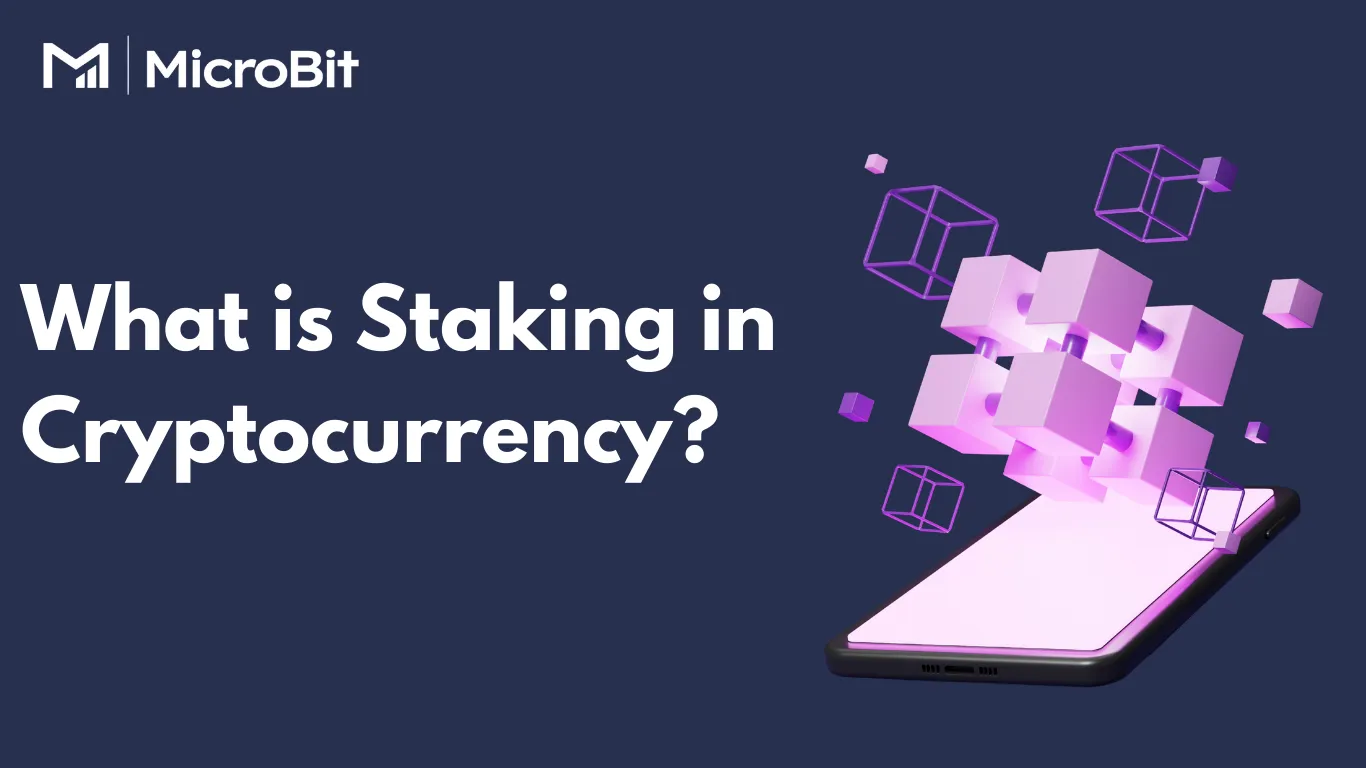
What is Staking?
Staking refers to users locking their cryptocurrency holdings in a blockchain network to participate in its operation and transaction validation process, thereby earning rewards. It provides a way to generate passive income, similar to the concept of earning interest.
Staking typically occurs on blockchains that use the Proof of Stake (PoS) consensus mechanism can enhance transaction speed, efficiency, and cost-effectiveness in blockchain networks. PoS involves a series of processes including staking, validation, and creating new blocks. Users lock up a certain amount of cryptocurrency in the network as collateral to qualify as validators (or validator nodes). The more tokens a user stakes, the higher their chance of being selected to validate the next block. When a validator successfully validates transactions and adds a new block, they receive block rewards, which are distributed proportionally to staking participants.
Generally, the more coins staked and the longer the staking period, the greater the rewards.
Staking can be done individually or through a staking pool, where multiple participants aggregate their assets to lower entry barriers and share rewards.
Can Hong Kong-Listed Ethereum ETFs Participate in Staking?
On April 7, 2025, Hong Kong’s Securities and Futures Commission (SFC) amended its rules to allow licensed virtual asset trading platforms and funds to provide cryptocurrency staking services. This means that Hong Kong-listed Ethereum ETFs can now legally participate in staking, allowing investors to earn staking rewards through ETFs. This also allows participants to contribute directly to strengthening the blockchain's resilience while improving its capacity to process transactions.
Marking a significant step forward in Hong Kong’s regulatory innovation and ecosystem development for crypto assets.
Can Bitcoin Be Staked?
Bitcoin itself does not support staking because it operates on the Proof of Work (PoW) consensus mechanism rather than Proof of Stake (PoS), which significantly relies on computational power. Only cryptocurrencies using PoS can be staked.
What Are the Risks of Staking?
While staking can generate passive income and support blockchain network security, it also carries several risks, including:
-
Price Volatility Risk
Cryptocurrency’s prices are highly volatile. Even if staking offers high annualized returns, a sharp drop in token value could still result in an overall investment loss.
-
Liquidity Risk
Staked assets are often locked for a period, during which they cannot be freely transferred or sold. If the market plunges suddenly, investors may not be able to exit in time to limit losses.
-
Slashing Risk
In PoS mechanism, if a staker or validator behaves improperly (e.g., going offline or malicious operations), they may face slashing penalties, losing part or all of their staked assets.
-
Technical Risks
Smart contract bugs, software errors, or blockchain security issues could lead to frozen, lost, or unrecoverable funds.
While staking offers passive income and supports blockchain operations, investors should carefully assess market volatility, liquidity constraints, technical, and platform security risks before participating.
Disclaimers
Investing involves risks, including the potential loss of principal. Investments in emerging markets are subject to additional risks, such as higher market volatility and lower trading liquidity, which may lead to greater losses compared to investments in developed markets. Please carefully consider the fund’s investment objectives, risk factors, fees, and expenses before investing. These and other details are outlined in the fund’s prospectus, which should be reviewed before making an investment decision.
MicroBit Capital Management Limited is not operated, endorsed, issued, sold, or promoted by index providers (applicable to ETFs funds). For more details on index providers, including disclaimers, please refer to the relevant offering documents of MicroBit Capital Management Limited
Sources: Fund performance and index data (if applicable) are provided by MicroBit Capital Management Limited and relevant index providers. This document is prepared by MicroBit Capital Management Limited and has not been reviewed by the Securities and Futures Commission.