
The cryptocurrency market experienced a volatile 2025, characterized by a sharp fourth-quarter reversal driven by escalated geopolitical tensions and a less accommodative-than-expected monetary policy outlook. Looking ahead to 2026, the outlook appears more constructive, underpinned by a supportive macroeconomic environment featuring stimulative fiscal measures and potential monetary easing in the U.S., alongside a maturing regulatory landscape that promises enhanced clarity. Furthermore, with the historical four-year halving cycle diminishing in influence, deepening institutional adoption through regulated and diversified vehicles is likely to provide structural support, fostering more sustainable and stable market development in the year ahead.
Market Performance Overview: 2025, A Surge to Peaks, A Correction to Consolidation
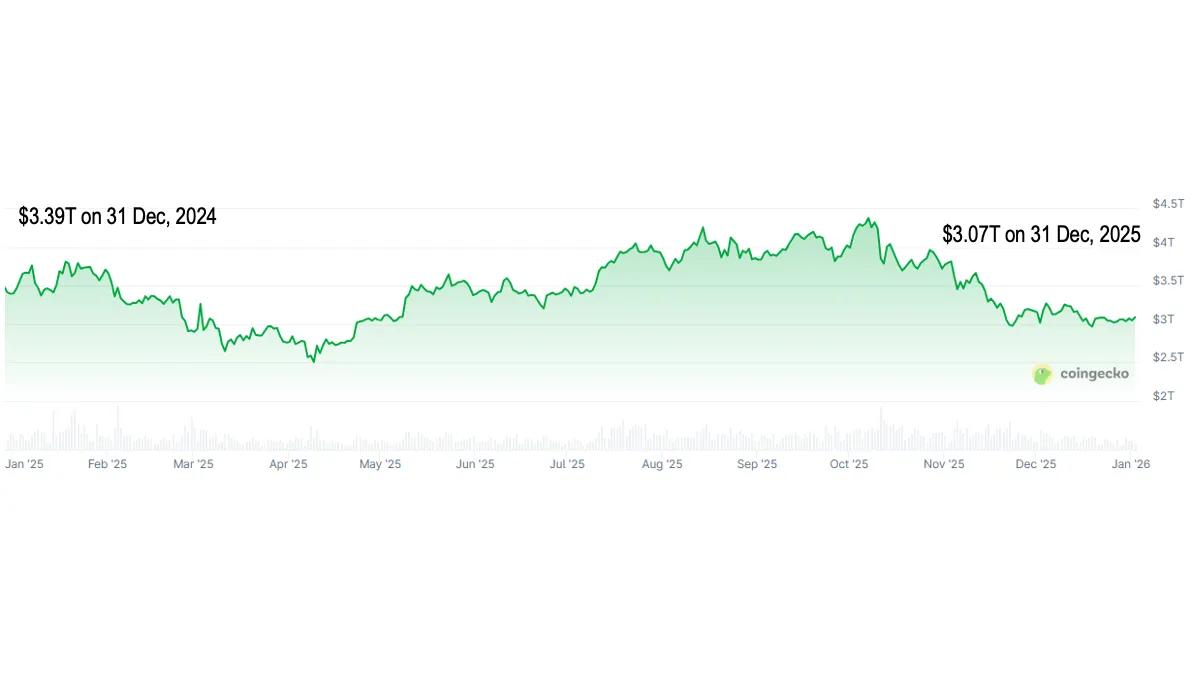
December 2025 witnessed up and down global crypto market dynamics. According to CoinGecko, after an unsuccessful attempt to breach and hold above the US$3.3tn mark, the total market capitalization settled at approximately US$3.1tn by month-end. This retreat was primarily driven by a notable price correction in BTC.
Reflecting on the full year, the cryptocurrency market embarked on a significant journey. Starting from US$3.4tn at the end of the previous year, total market cap surged to an annual peak of approximately US$4.4tn in early October, mainly contributing to the proactive engagement from the Trump administration through supportive crypto legislation include GENIUS Act, CLARITY Act, etc. and clearer regulatory frameworks, coupled with the broadening adoption and launch of crypto ETFs.
Subsequent to the October peak, the market entered a pronounced corrective phase, concluding the year at the aforementioned US$3.1tn, translating to an implied annual decline of roughly 9.4%. The market downturn was largely driven by the U.S. announcement of 100% tariffs on Chinese goods in early October, which triggered a wave of forced liquidations across leveraged crypto positions. Bitcoin fell over 16% in a day, while altcoins dropped 60–80%, leading to a sustained erosion of capital and sentiment.
Figure 1. Crypto Market Cap in 2025
Source: Coingecko, MicroBit, as of 2 Jan, 2026
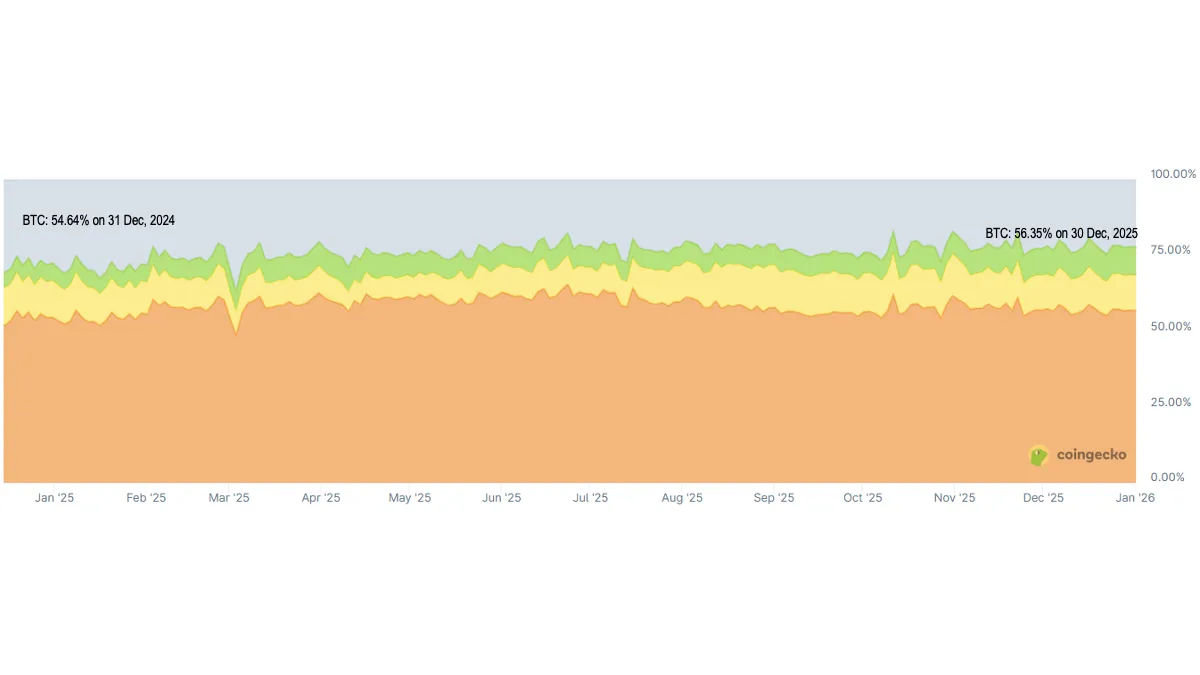
As of 31st December 2025, the BTC dominance rate edged up 1.8ppts to 56.4%, compared to 54.6% at the beginning of the year, indicating a continued shift of capital from Altcoins to BTC amid market volatility and corrections.
Figure 2. BTC Dominance Chart
Source: Coingecko, MicroBit, as of 2 Jan, 2026
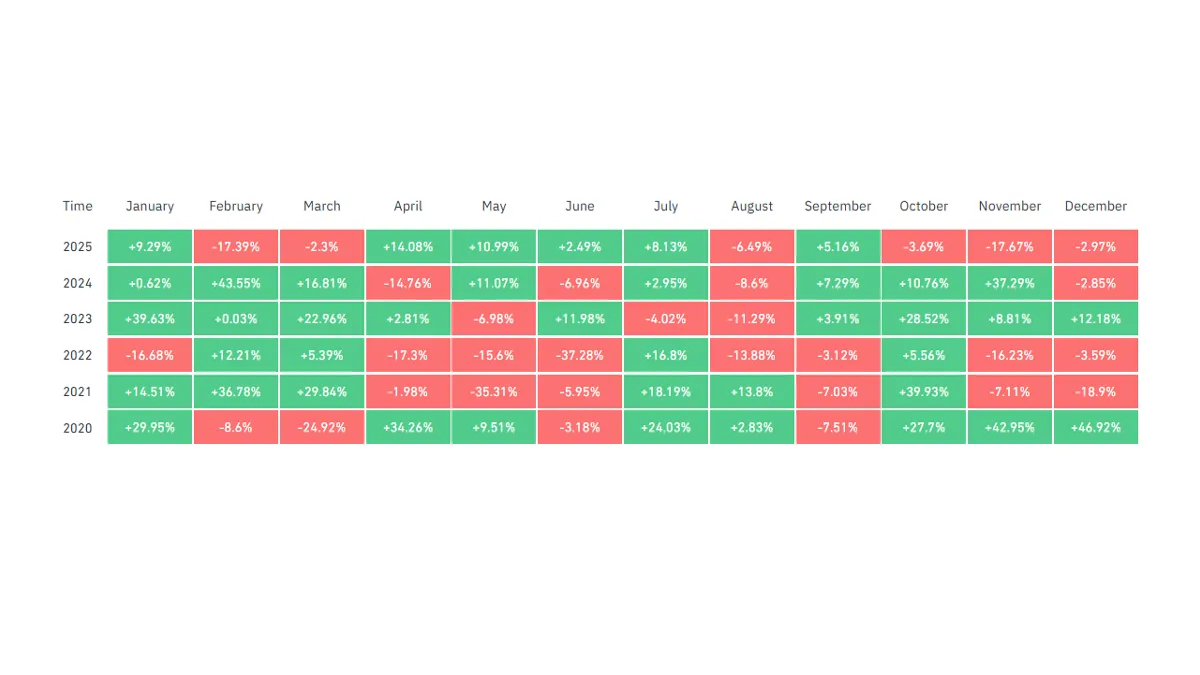
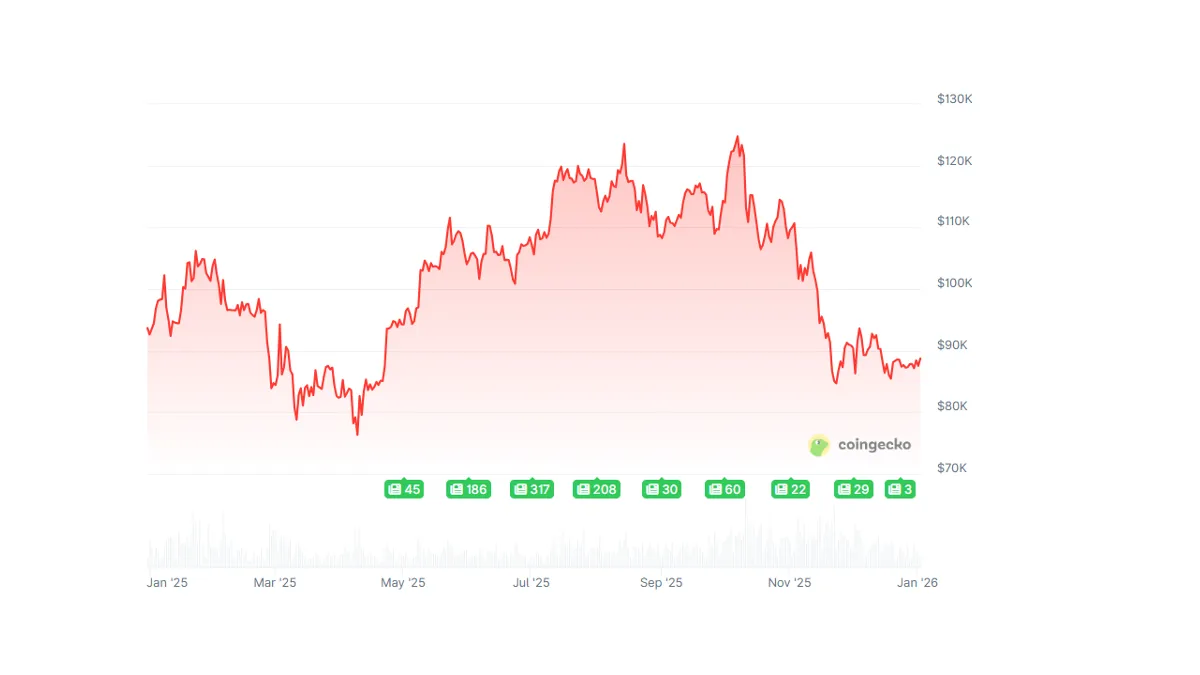
For the full 2025, BTC posted a loss of 4.5%, with a decline of 3% recorded in December alone. Ether underperformed over the same period, accumulating an annual loss of 11.6%, while declining 0.65% in December. [1] This overall negative performance was primarily due to a cascade of high-leverage liquidations that began in late October, which eroded the substantial price gains achieved in the first half of 2025.
Figure 3. BTC Monthly Return
Source: Coinglass, MicroBit, as of 2 Jan, 2026. Investment involves risks. Past performance does not represent future performance.
Figure 4. BTC Price Change
Source: Coingecko, MicroBit, as of 2 Jan, 2026. Investment involves risks. Past performance does not represent future performance.
Figure 5. ETH Price Change
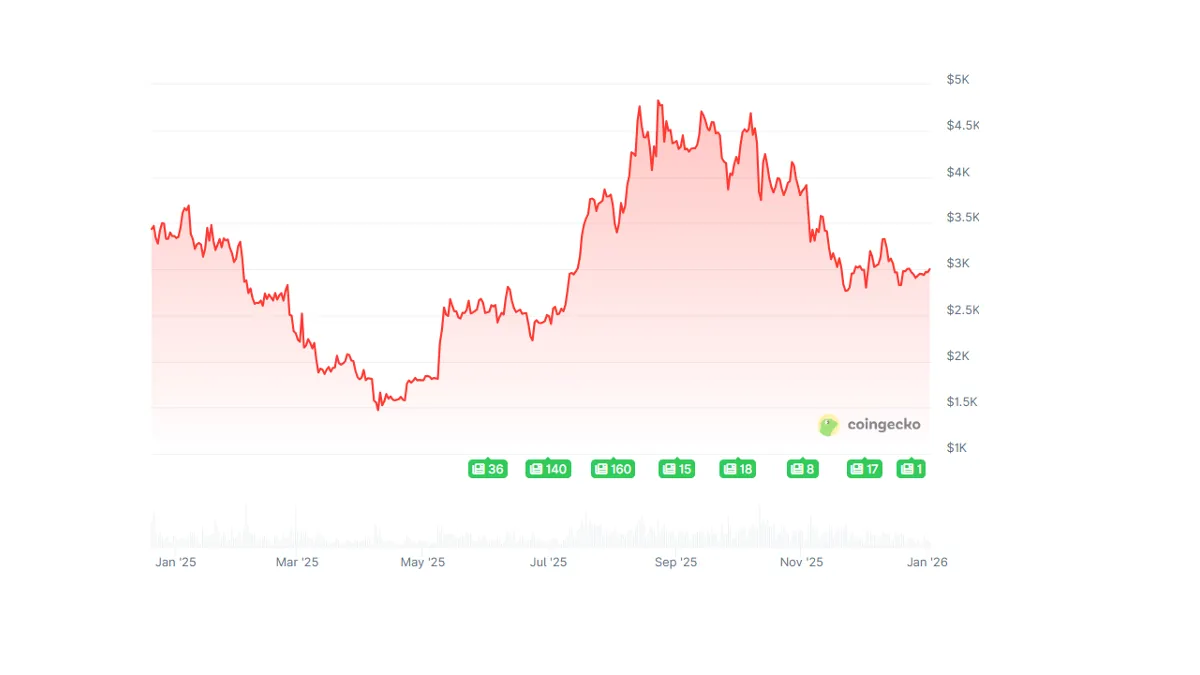
Source: Coingecko, MicroBit, as of 2 Jan, 2026. Investment involves risks. Past performance does not represent future performance.
Market Sentiment: Cautious Sentiment Paves Way for Potential Recovery
In December 2025, the crypto Fear & Greed Index provided by Coinglass, hovered around 20, persistently indicating "Extreme Fear". A brief breach of this threshold in early January suggested a modest easing of selling pressure and a marginal, albeit fragile, improvement in market sentiment, which remained predominantly cautious. Historically, prolonged "Fear" phases often signal the latter stages of a bear market. These periods have typically provided strategic entry points for long-term accumulation, laying a potential foundation for BTC's price recovery in the coming year.
Figure 6. Crypto Fear & Greed Index in 2025

Source: Coinglass, MicroBit, as of 2 Jan, 2026. Investment involves risks. Past performance does not represent future performance.
ETF Dynamics: Convergence with Traditional Assets as A New Path
In December, total BTC spot ETFs continued to experience net cash outflows, with a net withdrawal of US$1.1bn for the month, according to Coinglass and Binance. This implies an unprecedented cumulative net outflow for Bitcoin spot ETFs over the November-December period. Similarly, total Ether spot ETFs recorded a combined net outflow exceeding US$2bn over the same two months, reflecting the broader downturn in the virtual asset market.
Figure 7. Total BTC Spot ETFs Net Inflow
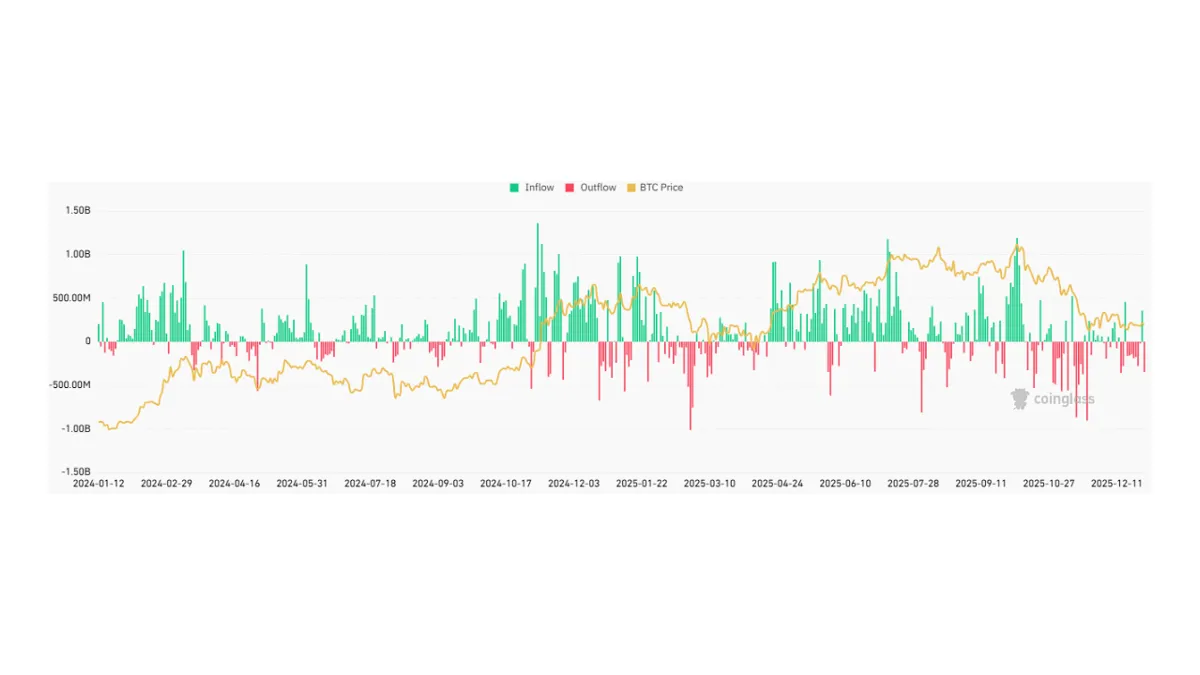
Source: Coinglass, MicroBit, as of 2 Jan, 2026. Investment involves risks. Past performance does not represent future performance.
Among newly launched ETFs in December, a notable trend emerged with the introduction of more diversified composite ETF products. The combination of virtual assets with other investment categories, such as pairing cryptocurrencies with gold or oil-related futures, or blending virtual assets with equities in blockchain and tokenization platforms, is increasingly becoming a market trend. This development signals a growing focus on risk diversification and reflects sustained confidence in the long-term value proposition of digital assets.
Future Outlook
Looking ahead to 2026, the crypto asset market is poised to enter a more mature phase of development. This transition will be driven by supportive macroeconomic conditions, clearer regulatory frameworks, and accelerating institutional adoption, which are gaining prominence as the historical four-year halving cycle continues to diminish in market impact.
The U.S. macroeconomic landscape is expected to provide a moderately supportive environment. The implementation of expansive fiscal measures, including tax relief and strategic public expenditure under the OBBBA, will likely stimulate economic activity and partially offset fiscal constraints. Concurrently, the Fed is projected to maintain a cautious stance, balancing gradually moderating, though still elevated, inflation against emerging labor market vulnerabilities. This dynamic is anticipated to create conditions for measured monetary easing in the latter part of the year. The combination of stimulative fiscal policy and more accommodative monetary stance should bolster overall market liquidity, historically a favorable condition for risk assets like cryptocurrencies. Consequently, virtual assets are poised to strengthen their role as a portfolio diversifier, attracting incremental capital amid a fluid macro landscape.
The regulatory framework for virtual assets is projected to mature significantly in 2026, enhancing market integrity and stability. The continued advancement of crypto market structure bill, which aims to define jurisdictional boundaries and establish clear rules for stablecoins, fraud prevention, and anti-money laundering, will be a central theme. While the final enactment of such legislation may face procedural delays, the sustained debate and forward momentum on these critical issues will bolster institutional confidence. This evolving clarity is anticipated to systematically elevate the compliance premium associated with regulated virtual assets, thereby reinforcing their legitimacy and integration within the broader financial ecosystem.
The institutional adoption of cryptocurrency is poised to deepen further in 2026, benefitting from regulatory progress and the maturation of infrastructure like ETFs and compliant solutions. A broadening spectrum of institutional players, including insurers, SWFs, and corporate treasuries, are expected to allocate to virtual assets through regulated vehicles like ETFs, publicly offered trusts, and on-chain compliant yield products. This structural shift will elevate institutional capital participation, gradually reducing the market's historical overreliance on retail sentiment and contributing to more stable and diversified price dynamics.
The diminishing influence of Bitcoin's scheduled supply halving is reshaping its market dynamics. While the traditional four-year cycle typically saw price peaks emerge within 12–18 months post-halving, followed by sustained bearish phases, this pattern is weakening as the total supply nears its 21 million hard cap and the circulating base continues to expand. As a result, BTC pricing has shifted from being predominantly supply-driven to increasingly reflecting macroeconomic conditions and institutional demand. Against this backdrop, 2026 continues to present substantive upside potential for Bitcoin’s price trajectory.
Source:
1. Coingecko, MicroBit, as of 31 Dec, 2025.
Disclaimers
This material is produced by MicroBit Capital Management Limited ("MicroBit") and is intended for Hong Kong investors only. All content is for general information purposes and does not constitute an offer, solicitation, or recommendation to buy or sell any financial instruments, nor is it legal, financial, tax, or investment advice.
Investments involve risks. The value of investments can go up or down, and investors may lose some or all of their invested capital. Past performance is not a guarantee of future results. You should carefully consider your investment objectives and risk tolerance and seek advice from a professional financial advisor before making any investment decisions.
MicroBit does not guarantee the accuracy, timeliness, completeness, or reliability of the information provided. All materials are presented “as is”, without any warranties of any kind, whether express or implied, including but not limited to merchantability, fitness for a particular purpose, or non-infringement. Unless otherwise specified, some of the views and recommendations are compiled by MicroBit based on publicly available data and market experience.
Securities and Futures Commission (SFC) authorization is not a recommendation or endorsement of a scheme, nor does it guarantee its commercial merits or performance. This material has not been reviewed by the SFC.
Copyright © 2025 MicroBit Capital Management Limited. All rights reserved.
[1] Source: Coingecko, MicroBit, as of 31 Dec, 2025.