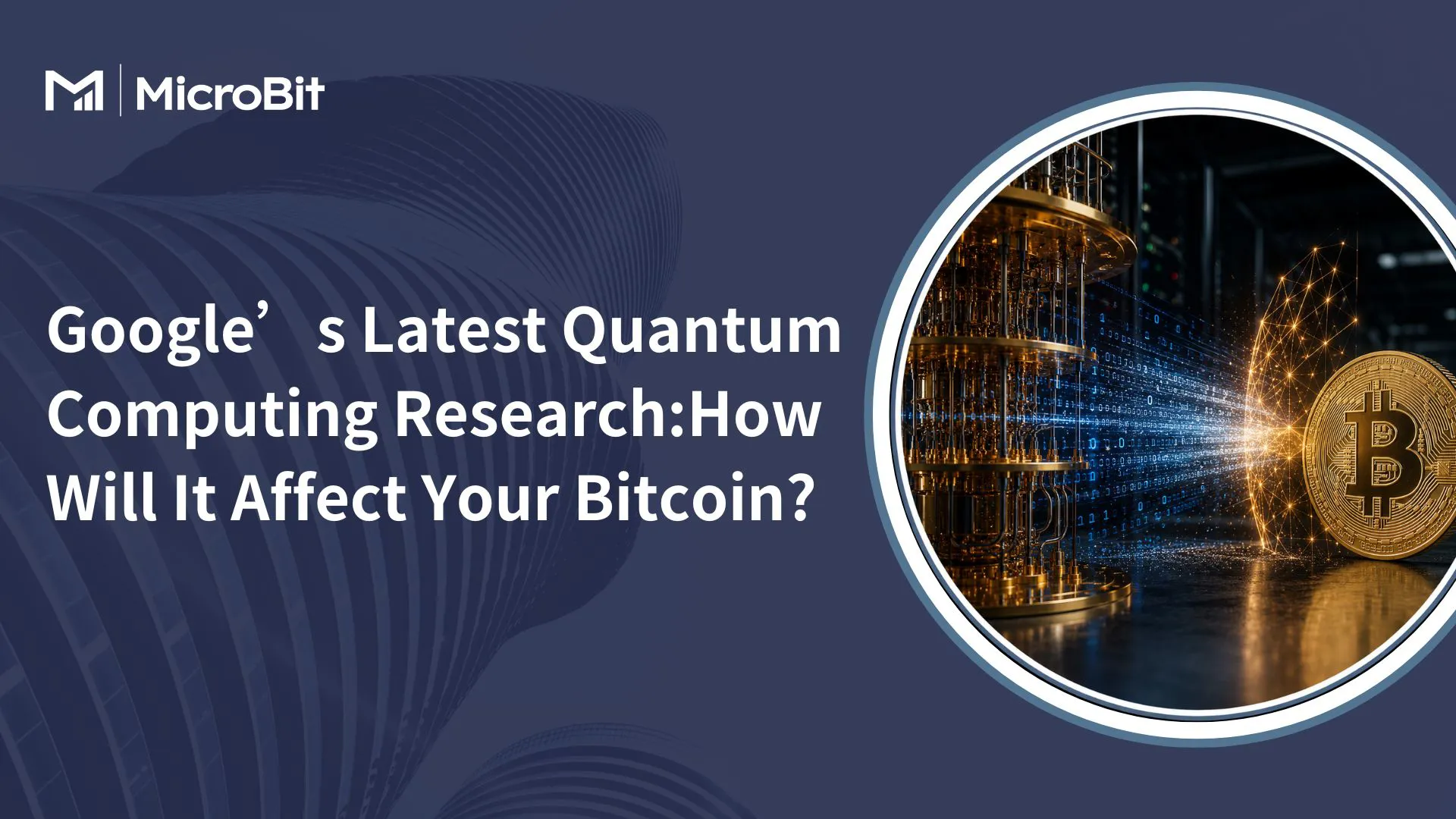
In March 2026, Google published a whitepaper detailing a quantum computing breakthrough that enables processors to simulate complex mathematical problems at unprecedented speeds. The research classifies quantum computers into two categories: fast-clock and slow-clock systems. While both pose a threat to blockchain security, "fast-clock" systems—leveraging superconducting, silicon-based, or photonic qubits—could theoretically crack existing encryption (including Bitcoin’s Elliptic Curve Cryptography) in minutes. In a very short time, the headlines about “Bitcoin going to zero” have sparked much debate.
To understand the risk, we must first look at why Bitcoin has achieved global consensus: What problem does it solve, where does its value come from, and which parts of that value proposition are threatened by quantum computing?
i. From Financial Crisis to "Digital Gold": What is Bitcoin's Value?
The 2008 financial crisis exposed that centralized institutions could unrestrictedly expand the money supply, leading to the dilution of the purchasing power of public assets. As a decentralized monetary experiment, Bitcoin strictly locks its total supply at 21 million coins through its underlying code. Its scarcity, free from the intervention of any single organization, builds its foundation against inflation and is the cornerstone of its value as "digital gold."
How does Bitcoin maintain a secure ledger without a central bank?
The answer is Proof of Work (PoW). This mechanism requires a global network of miners to compete using computational power to validate transactions. When combined with the "full network verification" of a distributed ledger, any attempt to tamper with the data is rejected by the consensus.
This mechanism guarantees the security and fairness of the accounting process. However, the quantum threat mentioned in the Google paper primarily targets the encryption algorithm that protects asset ownership.
ii. Which Part of Bitcoin Does Quantum Computing Primarily Attack?
Bitcoin ownership isn't stored in a file; it’s a "right of claim" on a distributed ledger. The digital wallet doesn’t hold coins; it is essentially a digital tool for keeping the private key 。Its asset security relies on asymmetric cryptography:
• Private Key (Unique Credential): Known only to the holder, it is the unique mathematical key that proves to the system the ownership of "transfer authorization," used to authorize and sign transactions.
• Public Key (Account Address): Encrypted from the private key, it can be disclosed to the entire network and is used to verify the validity of the signature.
This mechanism is based on a rigorous mathematical problem: deriving a public key from a private key is extremely easy, but it is practically impossible for traditional computing power to reverse-engineer a private key from a public key (practically unfeasible). However, quantum computers possess two characteristics:
• Quantum Superposition: It can break through the limits of traditional linear computing and process massive computational paths in parallel simultaneously .
• Quantum Interference: Through specific algorithms, the probability amplitudes of wrong answers cancel each other out, while the amplitudes corresponding to the correct answer reinforce one another, making it much more likely that the computation outputs the right result.
Google’s research suggests that a quantum computer with 500,000 physical qubits (approx. 1,200–1,450 logical qubits) could derive a private key from a public key in just 9 minutes. This 9-minute window is critical. It doesn’t just threaten old addresses whose public keys have long been exposed; it could also threaten cautious users who generate a fresh address for every transaction.
In the Bitcoin system, it takes about 10 minutes to confirm a transfer. When a transaction is initiated, the order first enters a "waiting area", at which point the public key is exposed. If a quantum computer can crack the private key within 9 minutes (before the transaction is confirmed), hackers can immediately forge a transfer with a higher transaction fee. Because accounting nodes prioritize orders with higher fees, the hackers’ transaction would likely be included first, effectively “cutting in line” and directly stealing the queuing assets halfway.
iii. How Far is Reality from a "9-Minute" Breach?
Although the paper proposes the feasibility of cracking, the reality is much more complex:
1. Technical Threshold: The gap between theoretical requirements and actual computing power. The cost of quantum computing is mainly based on the ratio of logical qubits to physical qubits. Currently, the latest stable logical qubits require a large number of physical qubits for error correction. To crack Bitcoin, hundreds of thousands to millions of physical qubits need to be constructed, but currently, the world's most advanced systems only reach the thousand-qubit level, leaving a significant gap. Optimistic estimates suggest it will take another 10 to 15 years.
2. Development Bottlenecks of Mainstream Quantum Architectures: The fast-clock superconducting architecture has strict requirements for ultra-low temperature environments, and the challenge of preventing interference in massive wiring has yet to be overcome. The silicon-based spin architecture has extremely harsh requirements for material purity, and nanoscale charge noise interference, along with adjacent qubit control challenges remain massive hurdles. The photonic route, while having the advantages of room-temperature operation and light-speed transport, faces the difficulty of miniaturizing massive optical networks and must overcome engineering challenges like photon loss.
Additionally, slow-clock architectures like trapped ions and neutral atoms, although not reliant on huge cryogenic systems, have excessively slow single-step operations, making it difficult to achieve a 9-minute interception attack.
3. Continuous Upgrades of the Bitcoin Network: The US NIST officially released Post-Quantum Cryptography (PQC) standards in 2024, which are gradually maturing. When the threat approaches, the community can replace the underlying layer with new encryption algorithms through a global consensus (fork), thereby defending against attacks at the quantum level. However, the development towards post-quantum cryptography also needs to solve several problems, such as PQC signatures requiring more blockchain storage, bandwidth, and verification costs.
Additionally, on-chain migration requires years of preparation to avoid network congestion. Meanwhile, blockchain upgrades cannot be decided by one person; it requires completing code testing and convincing global miners and exchanges to reach a consensus, along with ensuring compatibility in consensus mechanisms, transaction verification rules, and data structures. It is estimated to take 3 to 5 years to complete the transition to post-quantum cryptography.
In summary, the breakthrough in quantum computing is a milestone in the history of technology, but for the Bitcoin system, it is more like a "stress test" that drives the early iteration of cryptography.
iv. What actions can investors take now?
1. Avoid Address Reuse: As long as an outgoing transaction has been initiated, the public key of that address will be exposed on the blockchain, making it an easier target for future quantum attacks.
2. Allocate Assets Properly: It is recommended to diversify long-term holdings across multiple "new addresses that have never initiated outgoing transactions." In this state, the blockchain only records the hash value of the public key rather than the public key itself, which can reduce the risk of quantum computers reverse-engineering the private key from the public key.
3. Increase Transaction Fees: Users can try to pay higher fees to miners to ensure minimum transaction delays, thereby mitigating the risk of quantum attacks during spending.
4. Consider Professional Custody: Compared to individuals keeping their own wallets and bearing the risks of lost or hacked private keys alone, some virtual asset ETFs outsource the asset custody function to regulated professional institutions. Custodians have technical teams; once the Bitcoin network supports Post-Quantum Cryptography (PQC), professional custodians possess sufficient technical resources to securely and swiftly migrate massive assets to new quantum-resistant addresses at the first opportunity. Furthermore, with the institutionalized defense of asset segregation and legal constraints of fiduciary duty, the overall risk resistance capacity is often superior to a single investor maintaining private keys on their own.
References:
[1] Google Quantum AI (2026), <Securing Elliptic Curve Cryptocurrencies against Quantum Vulnerabilities: Resource Estimates and Mitigations>. Mountain View, CA: Google Research.
[2] Banque de France (2023), The link between money and inflation since 2008. Bulletin No. 245/2. Paris: Bank of France. Available at: https://www.banque-france.fr/en/publications-and-statistics/publications/link-between-money-and-inflation-2008 (Note: Official research by the Bank of France, exploring the correlation between unconventional money printing measures by central banks since 2008 and inflation.)
[3] Antonopoulos, A.M., 2017. Mastering Bitcoin: Programming the Open Blockchain. 2nd ed. Sebastopol, CA: O'Reilly Media.
[4] Cracking a 256-bit public key encryption requires 2^128 (about 3.4 × 10^38) basic operations. Assuming there are 1 billion supercomputers, and each can perform 1 trillion (10^12) cracking operations per second, it would still take 3.4 × 10^17 seconds (10.7 billion years) to finish cracking the encryption.
[5]SPINQ, April 25, 2025, <Quantum Interference in Quantum Computing: 2025 Full Guide>
[6]SPINQ, April 25, 2025, <Quantum Interference in Quantum Computing: 2025 Full Guide>
[7] Google Quantum AI (2026),< Securing Elliptic Curve Cryptocurrencies against Quantum Vulnerabilities: Resource Estimates and Mitigations. Mountain View, CA: Google Research> The Google paper proposes that cracking the Bitcoin algorithm requires 1,200 to 1,450 "logical qubits." However, under the constraint of a 0.1% hardware error rate, the system needs to mobilize nearly 500,000 "physical qubits" for error correction.
[8] Google Quantum AI (2026),< Securing Elliptic Curve Cryptocurrencies against Quantum Vulnerabilities: Resource Estimates and Mitigations. Mountain View, CA: Google Research>
[9] Addresses where such public keys are already exposed provide infinite time for quantum computers to crack them.
[10] Tech Nice (2024) 'Liangzi jisuan tupuo: juyou liangzi jiu cuo nengli de duo guangzi maichong [Quantum computing breakthrough: multi-photon pulses with quantum error correction capabilities]', Tech Nice, 24 March. Available at: https://www.technice.com.tw/issues/electro/102523/
[11] PostQuantum, 2025. IBM Quantum Computing Roadmap and Qubit Scaling Analysis. [online] London: PostQuantum. https://postquantum.com/quantum-computing-companies/ibm/
[12] Global Risk Institute (GRI), 2026. <Quantum Threat Timeline Report 2025. Toronto: Global Risk Institute in Financial Services>. https://globalriskinstitute.org/publication/quantum-threat-timeline-report-2025b/
[13] McKinsey & Company, 2023. Potential and challenges of quantum computing hardware technologies. [online] Available at: https://www.mckinsey.com/capabilities/tech-and-ai/our-insights/tech-forward/potential-and-challenges-of-quantum-computing-hardware-technologies The five mainstream architectures of quantum computers: superconducting, silicon-based spin, trapped ions, neutral atoms, and photonic architectures.
[14] Shiro Kawabata(2026),<Integration and Resource Estimation of Cryoelectronics for Superconducting Fault-Tolerant Quantum Computers>. https://arxiv.org/abs/2601.03922
[15] Burkard, G., Ladd, T.D., Pan, A., Nichol, J.M. and Petta, J.R., 2023. Semiconductor spin qubits. Reviews of Modern Physics, 95(2), p.025003.
[16] Bartolucci, S. et al., 2025. Comparison of schemes for highly loss tolerant photonic fusion based quantum computing. arXiv preprint arXiv:2506.11975. [online] Available at: https://arxiv.org/abs/2506.11975
[17] Webber, M., Elfving, V., Weidt, S. and Hensinger, W.K., 2022. The impact of hardware specifications on reaching quantum advantage in the fault tolerant regime. AVS Quantum Science, [online] 4(1), p.013801. Available at: https://pubs.aip.org/avs/aqs/article/4/1/013801/2835275/The-impact-of-hardware-specifications-on-reaching
[18] Zhou, H., Duckering, C., Zhao, C., Bluvstein, D., Cain, M., Kubica, A., Wang, S.T. and Lukin, M.D., 2025. Resource Analysis of Low-Overhead Transversal Architectures for Reconfigurable Atom Arrays. In: Proceedings of the 52nd Annual International Symposium on Computer Architecture (ISCA '25)
[19] National Institute of Standards and Technology (NIST), 2024. NIST Releases First 3 Finalized Post-Quantum Encryption Standards.https://www.nist.gov/news-events/news/2024/08/nist-releases-first-3-finalized-post-quantum-encryption-standards
[20] Gate, April 5,2026, <The Mystery of Consensus: Understanding the Progress of Bitcoin's Upgrade Community in One Article>
[21] Gate, April 5, 2026, <The Mystery of Consensus: Understanding the Progress of Bitcoin's Upgrade Community in One Article>
[22] Blocktempo, April 9, 2026, https://www.blocktempo.com/bernstein-quantum-computing-bitcoin-threat-manageable-upgrade-cycle-legacy-wallets/
[23] Securities and Futures Commission (SFC), 2023. Joint circular on intermediaries’ virtual asset-related activities. [online] Hong Kong: SFC. Available at: https://apps.sfc.hk/edistributionWeb/gateway/EN/circular/doc?refNo=23EC47
Important Information
• Investment involves risks. Past performance does not represent future performance. The price of the fund may go up or down. Investors may suffer all or significant investment losses. Investors should not make any investment decisions solely based on this information. Please note that the investment risks listed below are not exhaustive. Investors should carefully read the prospectus, product key factsheet and relevant documents before making any investment decisions to understand details including product characteristics, risk factors and distribution policies, and seek for independent financial advice when necessary.
• MicroBit Bitcoin Spot ETF (the “Sub-Fund”) is a sub-fund of MicroBit Funds Series (Hong Kong) ETF OFC (the “Company”). The investment objective of the Sub-Fund is to aim to provide investment results that, before fees and expenses, closely correspond to the performance of the price of bitcoin as reflected by CME CF Bitcoin Reference Rate – Asia Pacific Variant (the “Index”) by directly investing in bitcoin on SFC-Licensed VATPs. There can be no assurance that the Sub-Fund will achieve its investment objective.
• MicroBit Bitcoin Spot ETF could be subject to certain key risks such as Investment risk; Risks relating to bitcoin (including Bitcoin and bitcoin industry risk, Speculative nature risk, Extremely high volatility risk, Unforeseeable risk, Acceptance of bitcoin, Concentration of ownership risk, Fraud, market manipulation and security failure risk, Cybersecurity risks, Potential manipulation of Bitcoin Network risk, Regulatory risk, Internet risk, Fork risk, Virtual Assets’ trading platform risk in general and contagion risk, Risk of illicit use, Environment and energy consumption risk, Political or economic crisis risk, etc.); New product risk; Passive investment management risk; Risks in relation to Virtual Asset Trading Platform(s); Custody risk; Risks relating to the Index; Concentration risk; Tracking error risk; Trading hours differences risk; Trading risk; Reliance on market makers risk; Early termination risk; Multi-counter risk.
• The above products have been authorized by the Securities and Futures Commission (“SFC”). Authorization by the SFC does not imply official recommendation. This material is for reference only and does not constitute an offer or suggestion of any transaction in any products.
• This material is prepared by MicroBit Capital Management Limited and has not been reviewed by the SFC. If you are in any doubt about the content of this material, please refer to the prospectus, product key facts statement and other relevant documents for details, and seek for independent financial advice when necessary.
• The content contains several pieces of information compiled from third-party sources. MicroBit Capital Management Limited has made every effort to ensure that this data is accurate, complete, and up to date, and has taken verification measures to accurately reproduce the relevant information. However, MicroBit Capital Management Limited assumes no responsibility or liability for the accuracy of this information, its use, or reliance upon it. This content may include forward-looking statements based on MicroBit Capital Management Limited 's opinions, expectations, and assumptions. MicroBit Capital Management Limited has no obligation to update or revise any forward-looking statements, and actual results may differ significantly from those anticipated in the forward-looking statements. All copyrights to the content of this material, including all data, images, computer code, text, logos, and designs, are owned by MicroBit Capital Management Limited. The information provided in this content may not be copied or distributed without the consent of MicroBit Capital Management Limited.